You know which side of an issue you support, but your paragraph keeps repeating the same opinion without explaining why it matters. A strong argument needs more than a confident claim. It needs clear reasoning, relevant evidence, and a response to opposing views. An AI argument writer can help organize these pieces, but the challenge is knowing which generated ideas actually strengthen your position.
This guide compares five argument writer tools for college students, covering their features, free access, pricing, and limitations. Whether you're developing a thesis, building supporting arguments, or exploring counterarguments, you'll find options for different writing tasks.
Argument Writer Tools at a Glance
Tool | Best For | Key Features | Starting Price |
Verla | Building arguments around course materials | Assignment-based writing, research support, outlining, revision | $2.99/7-day Pro trial |
ProWritingAid | Developing arguments within a paragraph | Sparks, counterarguments, explanations, examples | Free; Premium from $30/month |
StudyCorgi | Generating an argumentative essay structure | Supporting and opposing paragraph controls | Free |
Originality.ai | Exploring counterarguments to a thesis | Counterargument generation and text refinement | Free tool |
AIFreeBox | Comparing different argument styles | Debate, Rogerian, policy, and tone settings | Free |
The best choice depends on where you're struggling. Some tools help organize complete essays, while others focus on improving individual claims or exploring opposing perspectives. If you're working on a full assignment, understanding how to write an argumentative essay can help you connect the thesis, supporting evidence, counterarguments, and conclusion before choosing a tool.
How We Compared These Options
Not every AI argument writer is designed for the same task. Some generate complete essay structures, while others help develop individual arguments or test opposing viewpoints. We compared their published features, input methods, free access, and pricing to identify which academic writing needs they are better suited for.
Here are the main factors we considered:
Argument development: Can the tool help create a clear claim, supporting reasons, explanations, and counterarguments?
Input options: Does it accept essay prompts, existing paragraphs, research notes, or assignment materials?
Customization: Can users adjust the argument structure, writing style, tone, or number of supporting points?
Free access and pricing: Are there limits on generations, input length, or advanced features?
Academic suitability: Does the tool help organize evidence-based reasoning, or does it mainly generate persuasive language?
These comparisons are based on official product information rather than independent performance testing. The tools address different stages of argumentative writing, so their order does not represent a verified ranking of writing quality. Any generated evidence, quotations, or references still need to be checked against reliable sources.
5 Tools for Building and Testing Arguments
1. Verla: Best for Planning Around Your Course Materials
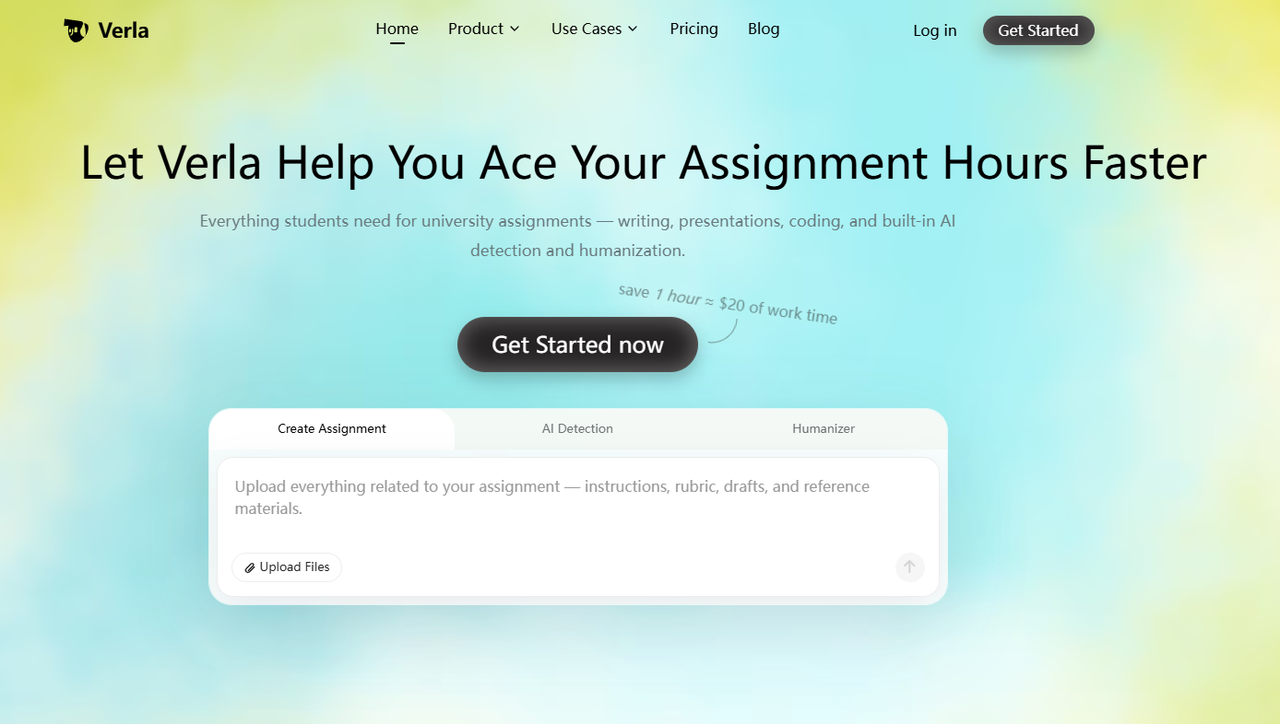
Verla's Academic Assistant helps students develop academic writing from assignment prompts, research notes, source materials, and reference files. Its broader workflow supports essay planning, research review, drafting, and revision, making it useful when an argument needs to follow specific course requirements rather than a simple topic prompt.
For students working on argumentative essays, Verla can help organize a thesis, supporting points, evidence, and counterarguments into a structured draft. A clear argumentative essay outline is especially important here, as each section should have a specific purpose and contribute to the central claim.
Verla also includes AI Detection and AI Humanizer for reviewing academic writing after drafting. Students can use these features to identify passages for closer review and improve clarity or flow, while remaining responsible for the accuracy of the argument and citations.
Pros:
Accepts assignment prompts, research materials, and supporting files.
Combines outlining, academic research, drafting, and revision.
Supports academic citations and common reference styles.
Includes AI Detection and AI Humanizer in the broader workflow.
Cons:
More extensive than a simple argument generator.
Generated evidence and reasoning still require verification.
No permanent free plan.
Price:
Pro Trial: $2.99 for 7 days, including one assignment generation; renews at the monthly Pro rate unless canceled.
Basic: $19.99/month, including 3 assignment generations.
Plus: $39.99/month, including 8 assignment generations.
Pro: $79.99/month, including 16 assignment generations.
Annual billing: From $7.99/month equivalent, billed yearly.
2. ProWritingAid: Best for Developing a Short Passage
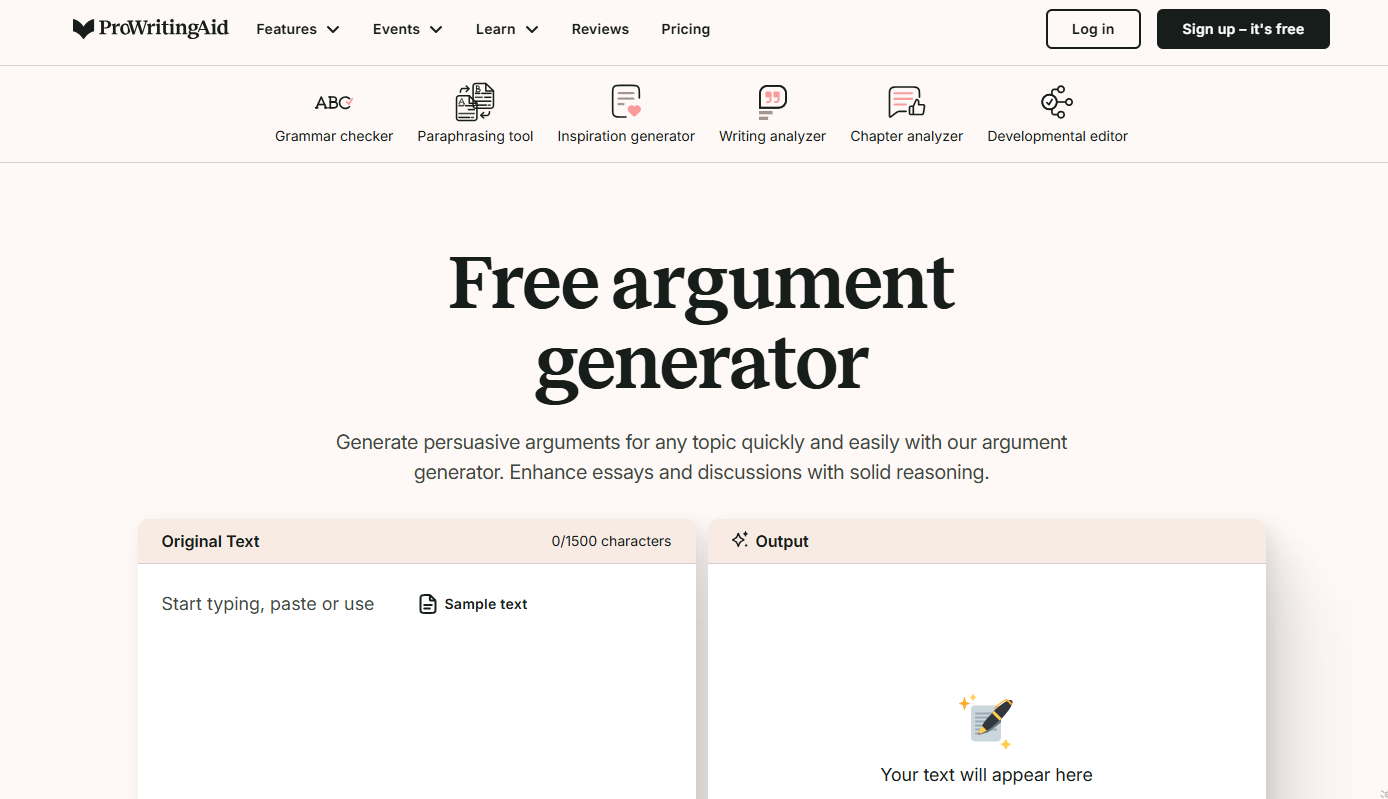
ProWritingAid provides AI-assisted writing features that help develop existing passages. Its argument-generator demo accepts up to 1,500 characters and offers options such as Counterargument, Explanation, Example, Definition, and Analogy. These allow students to explore different ways of strengthening a paragraph.
For example, if your paragraph introduces a claim but lacks explanation, the Explanation option may help identify a missing reasoning step. The Counterargument option can suggest an opposing perspective, which is useful when you need to evaluate whether your thesis is too broad.
However, generating an example or analogy doesn't automatically provide credible evidence. Students working on research-based assignments should compare suggested arguments with original sources before adding them to a draft.
Pros:
Multiple argument-development modes.
Dedicated counterargument and explanation options.
Useful for improving existing paragraphs.
Integrates writing assistance with editing features.
Cons:
Free demo input is limited to 1,500 characters.
Free accounts include only 3 Sparks per day.
Generated examples and arguments may require substantial verification.
Price:
Free: $0, including 3 Sparks per day.
Premium: $30/month.
Premium Pro: $36/month.
Annual Premium: $108/year ($9/month equivalent) at the currently displayed discounted rate.
Annual Premium Pro: $129.60/year ($10.80/month equivalent) at the currently displayed discounted rate.
3. StudyCorgi: Best for Exploring Essay Structure
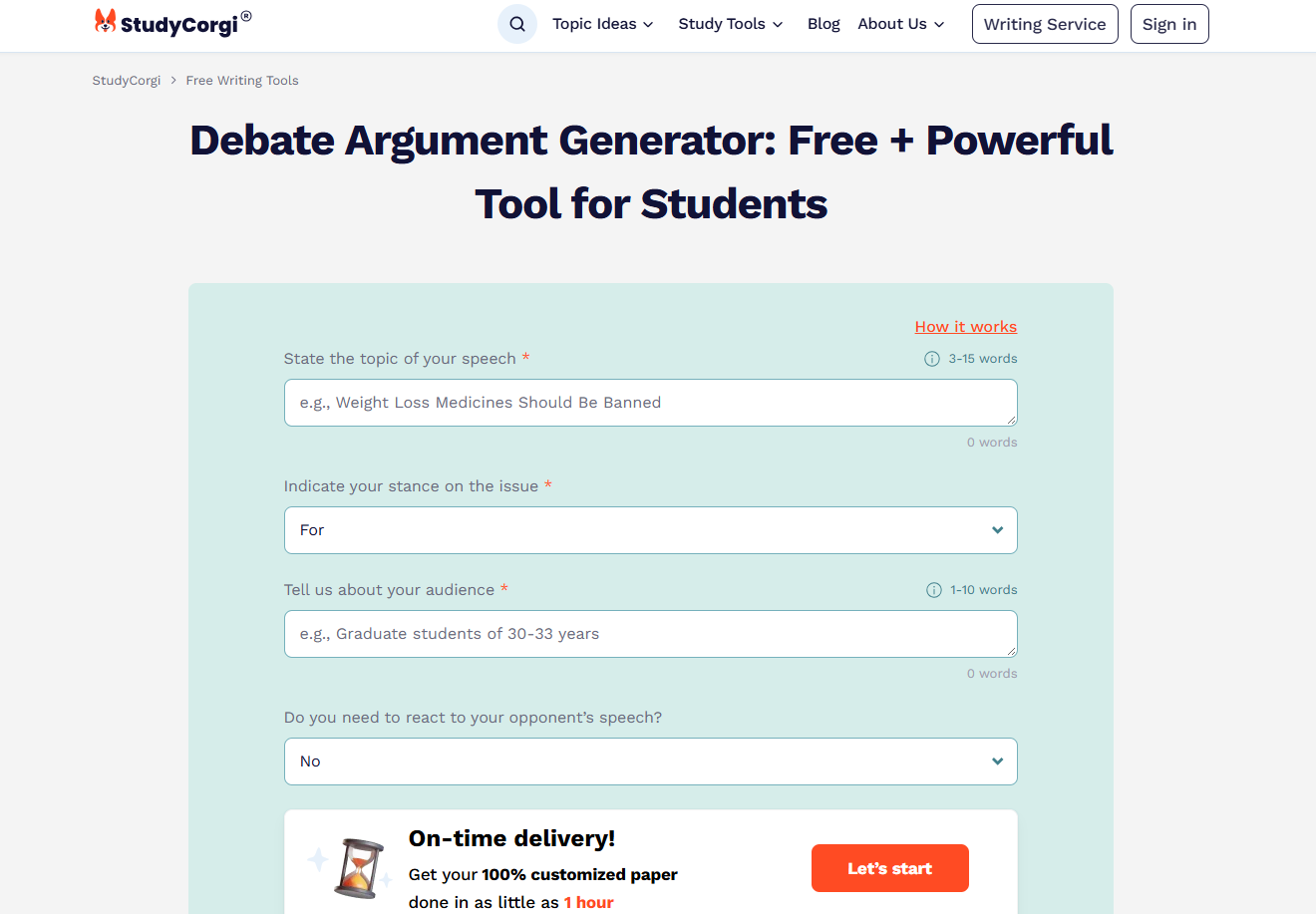
StudyCorgi offers a free Argumentative Essay Generator that helps students organize a position into supporting and opposing paragraphs. You can enter a topic, choose how many body paragraphs to include, and specify the number of supporting arguments and counterarguments.
This structure is useful when you know your position but haven't decided how to organize the essay. Instead of generating one long block of text, StudyCorgi gives you controls for distributing different points across the paper.
However, paragraph counts alone cannot determine whether an argument is complete. A strong thesis statement should guide the structure, and each supporting paragraph needs evidence that contributes to the same central position.
Pros:
Free argumentative essay generator.
Separate controls for supporting and opposing paragraphs.
Customizable points for individual body sections.
Useful for exploring essay organization.
Cons:
Paragraph counts don't guarantee logical completeness.
Generated arguments may repeat similar ideas.
Research sources and citations require verification.
Price:
Free argumentative essay generator.
No paid subscription is required for the basic tool.
4. Originality.ai: Best for Testing an Opposing View
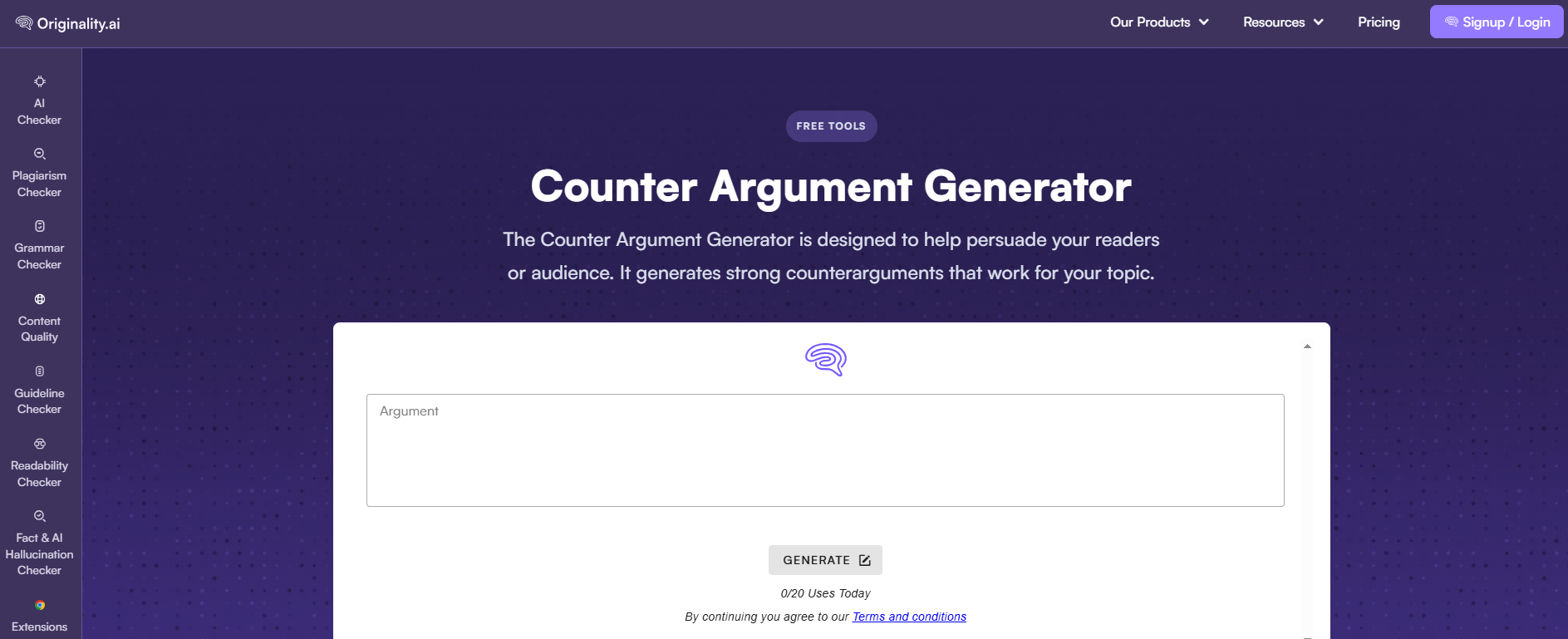
Originality.ai's Counter Argument Generator focuses on one part of argumentative writing: identifying an opposing position. Enter your topic, thesis, or existing argument, and the tool generates a counterpoint you can review and refine.
This can be useful when your essay presents a strong position but doesn't adequately address opposing evidence. Instead of selecting an easy objection, consider the strongest reasonable criticism of your claim.
A counterargument should test the logic of your position. Sometimes the response is a rebuttal, but other times you may need to acknowledge a limitation or revise your thesis. Students can use thesis statement examples to understand how narrowing a claim can make it more defensible.
Pros:
Dedicated counterargument generation.
Accepts an existing thesis or argument.
Text refinement options.
Free tool available online.
Cons:
Focuses on objections rather than complete essay drafting.
Generated opposing views may rely on unsupported assumptions.
Does not independently verify factual evidence.
Price:
Free Counter Argument Generator.
Originality.ai's separate AI detection and content analysis services offer paid subscriptions.
5. AIFreeBox: Best for Comparing Argument Styles
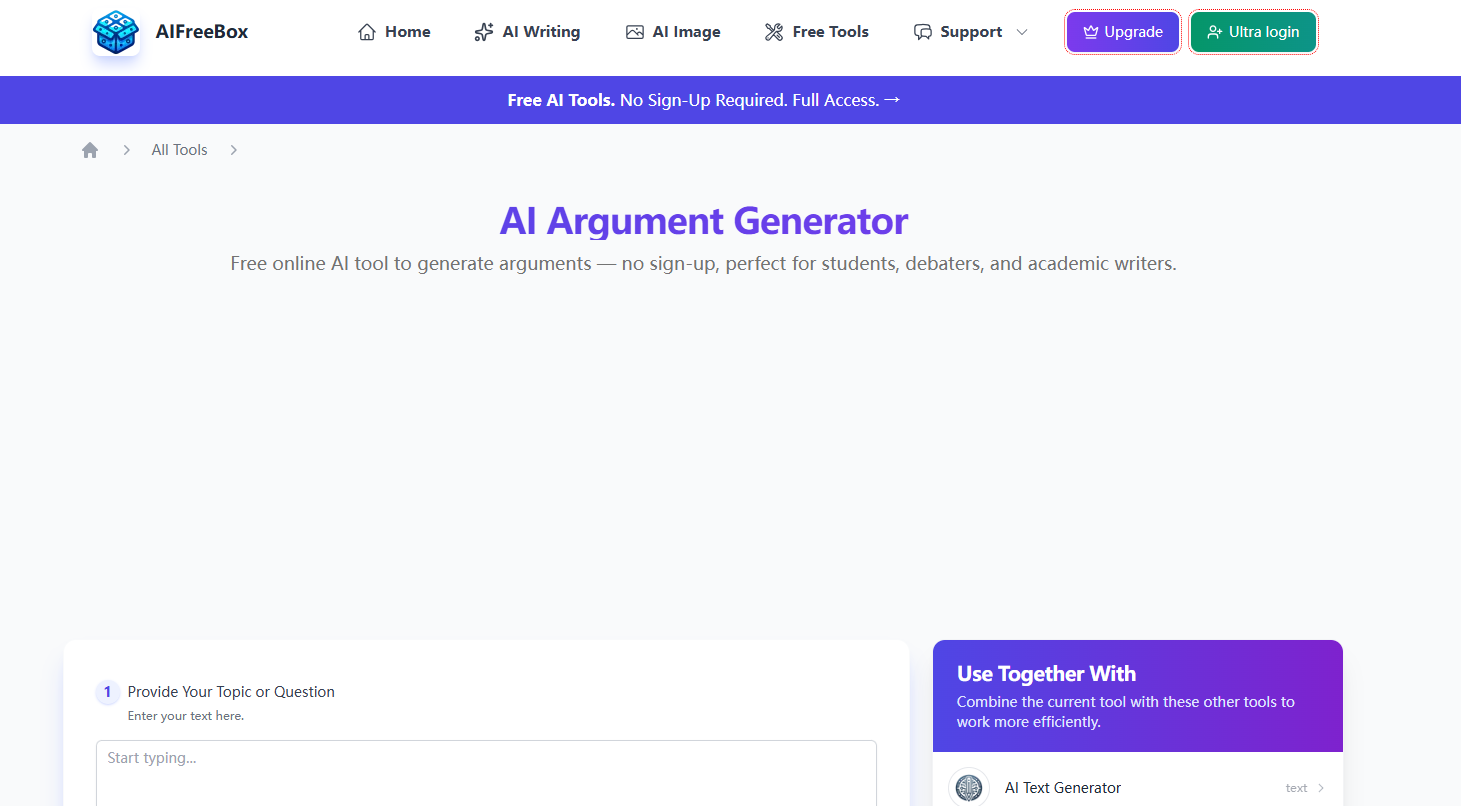
AIFreeBox's argument generator offers different writing styles and structures, including Scholarly Formal, Debate (Pro/Con), Rogerian, and Policy Memo. You can also adjust language and creativity settings to explore different ways of presenting the same topic.
This makes it useful when your assignment requires a particular argumentative approach. For example, a debate format emphasizes competing positions, while a Rogerian structure focuses on understanding opposing views and finding common ground.
Students comparing argument structures may also find the Classical, Rogerian, and Toulmin outline formats helpful. These frameworks organize claims and responses differently, and the right choice depends on the assignment's purpose and audience.
Pros:
Multiple argument styles and structures.
Pro/con and common-ground approaches.
Language and creativity settings.
Free online access without signup.
Cons:
Style settings do not verify factual accuracy.
Generated examples may lack credible references.
Requires editing to match specific course requirements.
Price:
Free online argument generator.
No signup required for basic access.
How to Use an Argument Writer Without Skipping the Reasoning
An AI argument writer can suggest claims and supporting points, but a convincing essay still needs evidence and logical connections. Before accepting generated content, make sure you understand what each part of the argument is supposed to establish.
Follow these five steps:
Start with a debatable claim. Your position should be specific enough to defend and open to reasonable disagreement. Understanding what a thesis statement is can help you distinguish a clear argument from a general topic.
Develop distinct reasons. Identify two or three reasons that support your position. Remove suggestions that repeat the same idea using different words.
Find reliable evidence. Support each major claim with relevant research, statistics, examples, or credible sources. Comparing AI research tools can help you choose a workflow for finding and organizing evidence.
Explain the connection. Don't leave evidence without analysis. Show why the source supports your claim and how it contributes to your thesis.
Address an opposing view. Consider the strongest counterargument and decide whether your response requires a rebuttal, concession, or narrower position.
For complete assignments, Verla's academic writing workflow can help organize these stages around the course prompt and supporting materials. However, the reasoning and source verification still need your review.
Build an Argumentative Essay Outline
Before drafting, organize your argument into a clear structure. An argumentative essay outline helps reveal which supporting points need evidence, where opposing arguments belong, and how each paragraph contributes to the thesis.
You don't need an elaborate outline. A working thesis, two or three supporting claims, relevant source notes, a counterargument, and a conclusion plan are often enough to begin.
An Argument Plan You Can Evaluate
Consider this hypothetical example of an argument plan:
Part | Working Content |
Claim | The university should pilot secure bicycle parking at two busy entrances. |
Reason | Convenient, secure storage may address a practical barrier for cyclists. |
Evidence Needed | Local theft reports, parking demand, student feedback, and installation costs. |
Reasoning to Test | Do those records show that storage is an important barrier at these locations? |
Counterargument | Limited funds may be better spent on other transport needs. |
Response | Compare the pilot's cost and expected use with alternatives; reduce or reject it if the case is weak. |
This example separates the proposed argument from the evidence needed to support it. Without research, claiming that secure bicycle parking will increase attendance would introduce an unsupported conclusion.
The claim, evidence, and reasoning framework provides a useful way to check whether the evidence actually supports a particular conclusion. Although commonly used in science education, the same reasoning principle applies to argumentative writing.
A Prompt for a More Useful AI Argument Writer
My working claim is [claim]. Using only the source notes below, identify two distinct supporting reasons, the evidence for each, and the reasoning connecting them. Provide the strongest relevant counterargument and explain whether it requires a rebuttal, concession, or revised thesis. Separate supported facts from assumptions and research gaps. Do not invent statistics, quotations, or citations.
A specific prompt gives the tool clearer boundaries. Still, you should check every supporting point against your original sources before including it in the final essay.
Conclusion
The best AI argument writer depends on the stage of your essay. StudyCorgi helps organize supporting and opposing paragraphs, ProWritingAid develops individual arguments, Originality.ai focuses on counterarguments, and AIFreeBox offers different argumentative styles.
For students working on complete assignments, Verla combines academic writing, research support, outlining, and revision in one workflow. Its AI Detection and AI Humanizer can also support later review, helping students improve clarity and presentation while checking their work against course requirements.