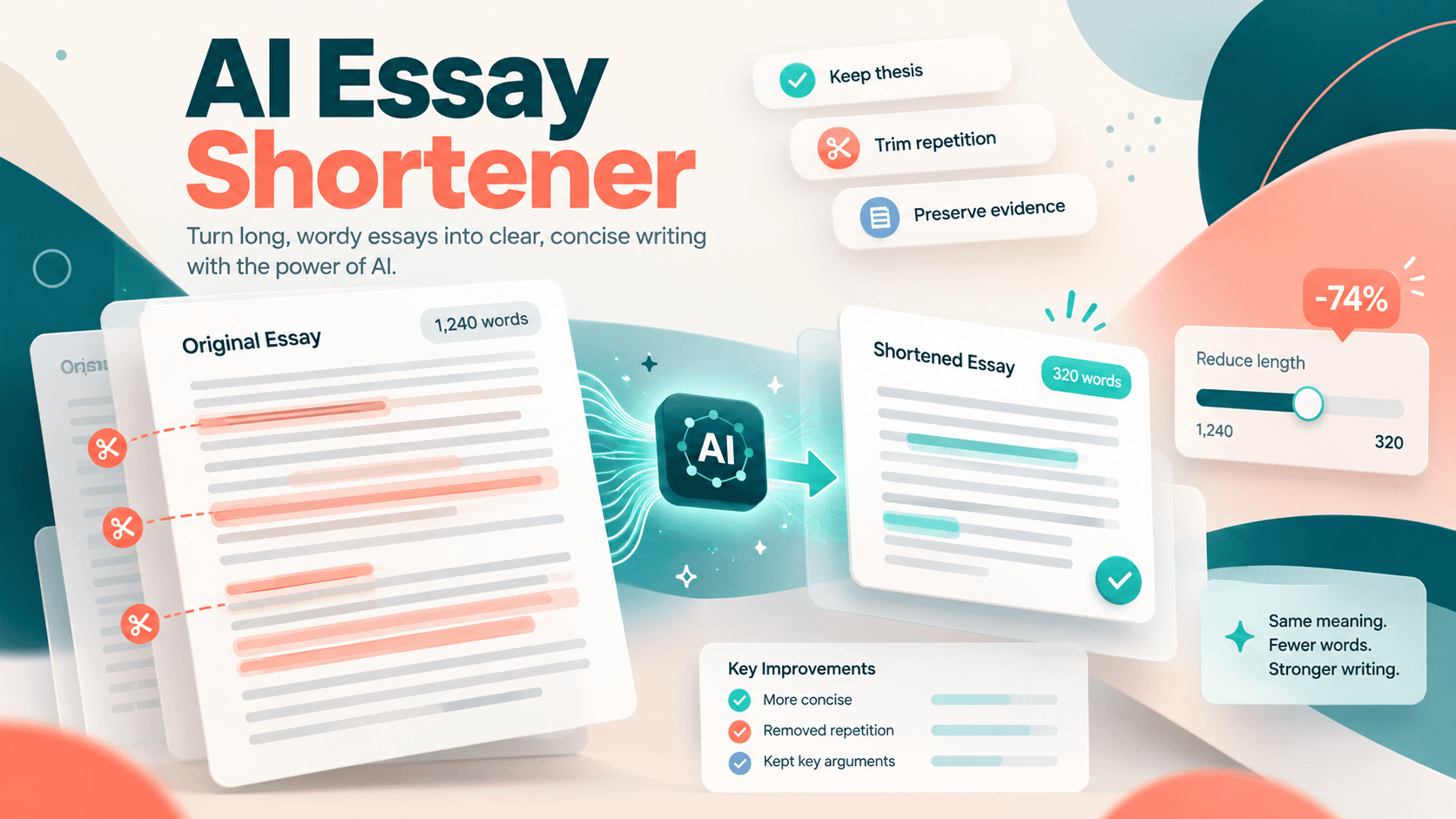
Your essay is finished, the sources are in place, and the word counter says you're 200 words over the limit. Cutting an example feels risky because it supports your argument, but repeating the same point in three different ways isn't helping either. A good AI essay shortener can make your draft more concise without removing the evidence and reasoning that matter.
This guide compares six options for shortening college essays, including free tools and broader writing workflows. You'll find their features, input limits, and pricing, plus practical ways to reduce your word count while keeping the original meaning.
AI Essay Shortener Options at a Glance
Tool | Best For | Main Features | Starting Price |
Verla | Revising wordy paragraphs and improving writing flow | Goal-based Paragraph Rewriter + AI Humanizer | $2.99/7-day Pro trial |
EssayDone | Preserving technical terms and key information | Keep-terms control, output length, multiple versions | Free |
EssayPro | Shortening essays to a target word count | 1,500-word input limit, word target, change report | Free |
EssayHub | Reviewing how much text was removed | Target word count and reduction report | Free |
Custom Writing | Creating a condensed overview of longer text | Word/sentence controls, prose or bullet output | Free |
Summarizer | Shortening individual sentences | Tone settings, copy and save | Free |
The right tool depends on how much you need to cut and what your assignment requires. A sentence shortener may be enough for a draft that's slightly over the limit, while longer assignments may need structural editing. Students comparing broader AI tools for writing essays should also consider whether research, citations, and revision features are included.
How We Compared the Tools
Not every AI essay shortener works the same way. Some reduce complete drafts, others focus on individual sentences, and a few generate summaries rather than edited essays. We compared their published features and limits to identify which writing tasks they are better suited for.
Here are the main factors we considered:
Task fit: Does the tool shorten a complete essay, revise paragraphs, condense sentences, or generate a summary?
Length controls: Can users set an exact word target, choose a reduction percentage, or adjust the output length?
Input limits: How much text can the tool process in one attempt?
Free access and pricing: Does the tool require registration, limit free attempts, or offer paid features?
Meaning preservation: Can users protect terminology, evidence, and important details while shortening?
These comparisons are based on available product information rather than independent performance testing. Shortening an essay is not just about removing words. You still need to check that the revised version supports the original thesis, preserves citations, and follows your assignment requirements.
6 Tools for Shortening Essays and Their Component Parts
1. Verla: Best for Goal-Based Paragraph Revision
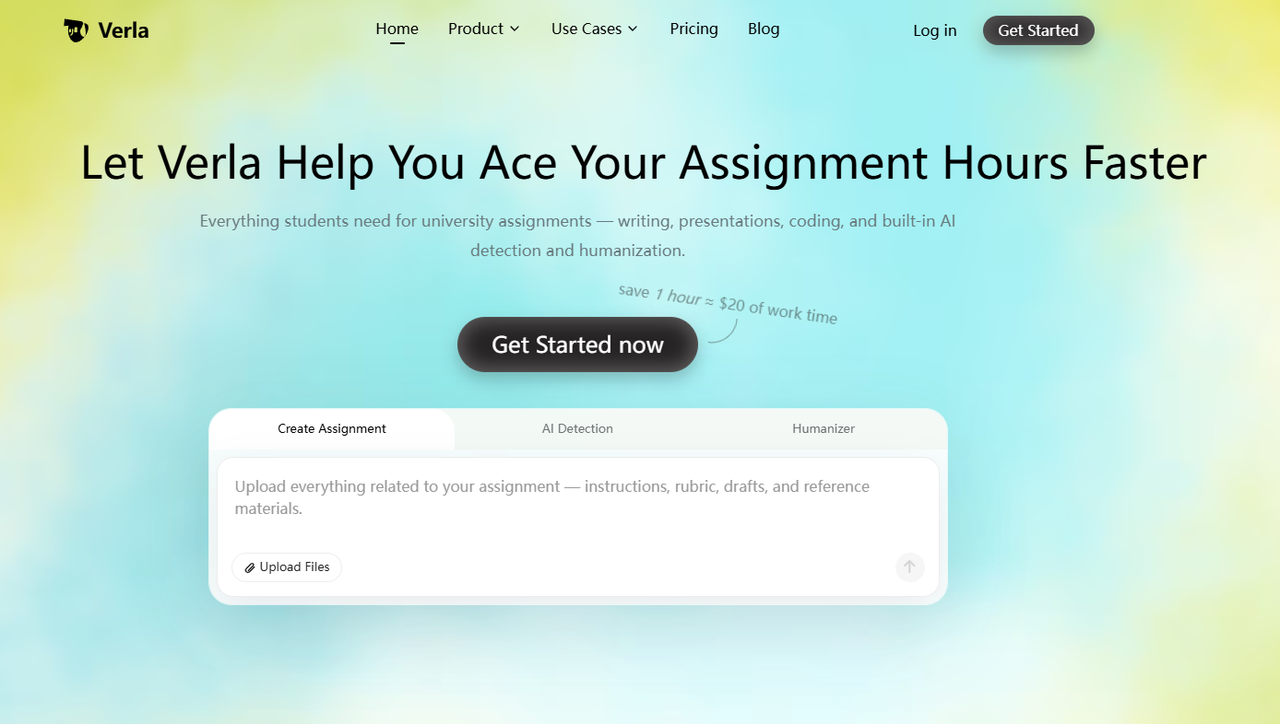
Verla is useful when your essay has wordy paragraphs that need more focused revision. Its Paragraph Rewriter starts with your existing text and lets you set a specific goal, such as making the writing shorter, clearer, or less repetitive. After entering your paragraph, you can continue in Verla's AI Humanizer workspace to refine the wording and flow.
Unlike tools built around an exact word-count target, Verla focuses on improving the expression of an existing argument. This is useful for students writing argumentative essays, where cutting unnecessary language should not remove supporting evidence or counterarguments.
The Humanizer can also help improve clarity and naturalness after shortening. However, students should still compare the rewritten paragraph with the original to make sure its meaning, evidence, and citations remain accurate.
Pros:
Supports specific revision goals, including shorter and clearer wording.
Uses the complete paragraph for context.
Combines rewriting with AI Humanizer.
Fits a broader academic writing and revision workflow.
Cons:
Requires login to continue into the full workspace.
Does not provide a dedicated numerical word-count target for paragraph shortening.
Price:
Pro Trial: $2.99 for 7 days, then renews at the Pro monthly rate unless canceled.
Basic: $19.99/month.
Plus: $39.99/month.
Pro: $79.99/month.
Annual billing offers discounted monthly-equivalent rates.
2. EssayDone: Best for Keeping Required Terms
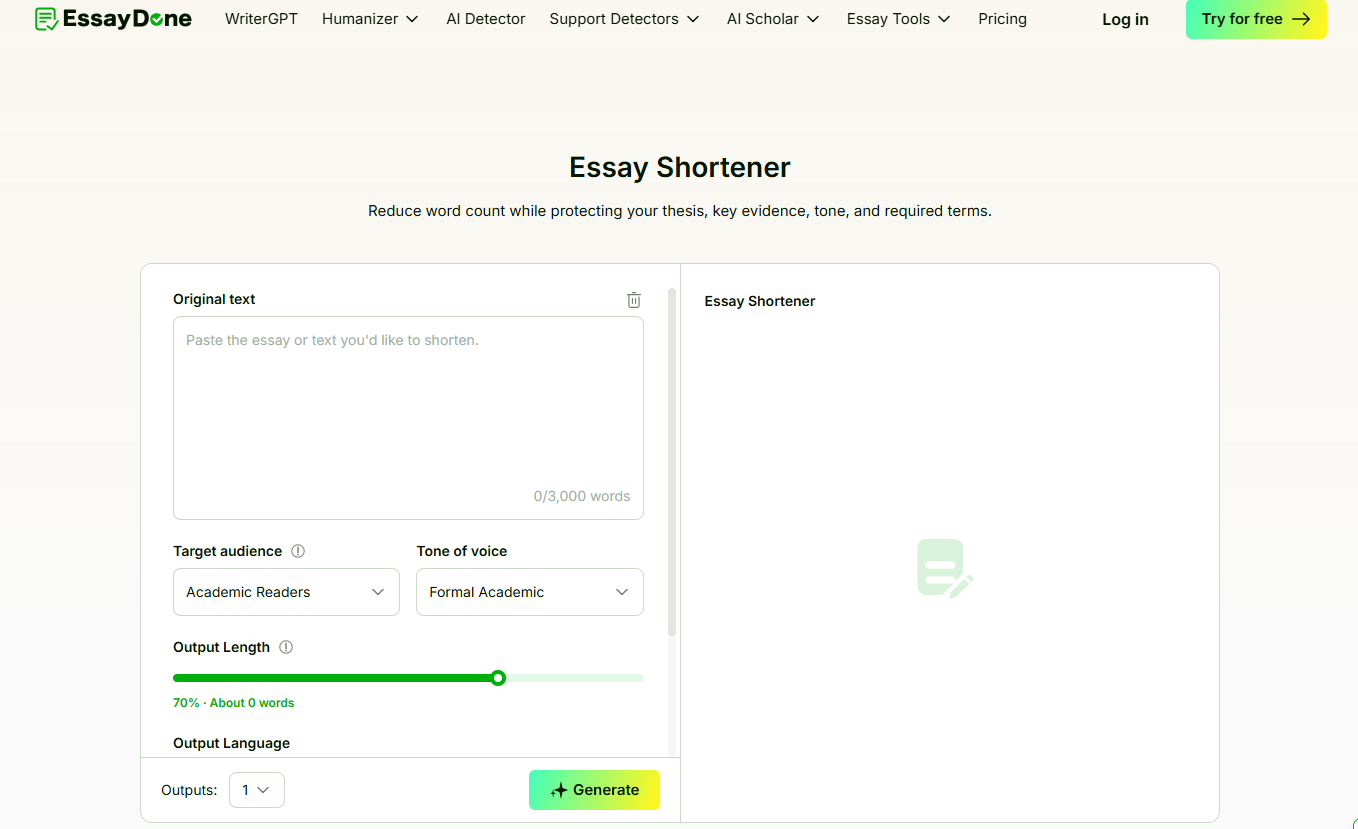
EssayDone offers a dedicated essay shortener that accepts up to 3,000 words. You can adjust the output length, target audience, tone, and language, and choose how many shortened versions to generate. One particularly useful feature is the optional Keep These Terms field, where you can enter words or phrases that should remain unchanged.
This makes EssayDone suitable for research-based assignments where technical vocabulary, names, or specific concepts must stay intact. When writing a research paper, even small wording changes can affect how accurately a finding or academic concept is presented.
The protected-terms option helps guide the shortening process, but it doesn't guarantee that every qualification or logical connection will remain. Compare the result with your original draft before using it.
Pros:
Up to 3,000 words per input.
Optional control for preserving required terms.
Customizable length, tone, language, and audience.
Multiple output versions for comparison.
Cons:
Inputs longer than 3,000 words need to be divided.
Preserving terminology does not guarantee that all supporting reasoning remains.
Price:
Free essay shortener available without signing in.
EssayDone offers separate paid services, but its basic Essay Shortener is available directly on the website.
3. EssayPro: Best for a Clear Word Target
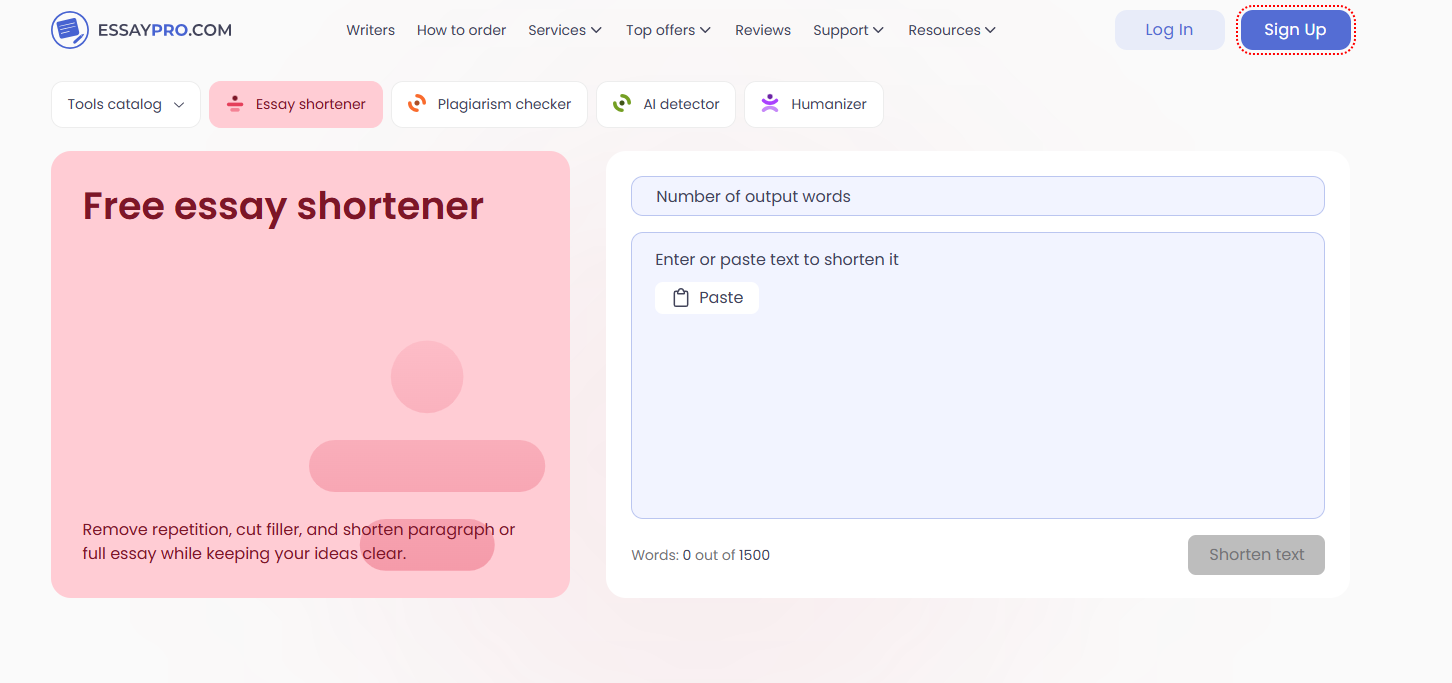
EssayPro is designed for students who know exactly how many words they need to remove. Paste an essay of up to 1,500 words, choose your target word count, and generate a shorter version. The tool provides feedback on changes to words, sentences, or characters.
The numerical target makes EssayPro useful when an assignment has a strict word limit. For example, if your draft is 1,200 words but the requirement is 1,000, you can request a 1,000-word version and review which parts were removed.
EssayPro generates one shortened version per attempt. You can run it again if needed, but longer essays may need to be processed section by section. A clear argumentative essay outline can help identify which sections contain repeated points before you begin cutting.
Pros:
Accepts a specific target word count.
Supports up to 1,500 input words.
Includes feedback on changes.
Free access without signup.
Cons:
Longer essays may require multiple attempts.
Each generation produces one version.
Numerical targets do not guarantee that important reasoning will be preserved.
Price:
Free, with no signup required.
No stated limit on the number of uses.
4. EssayHub: Best for Reviewing the Scale of a Cut
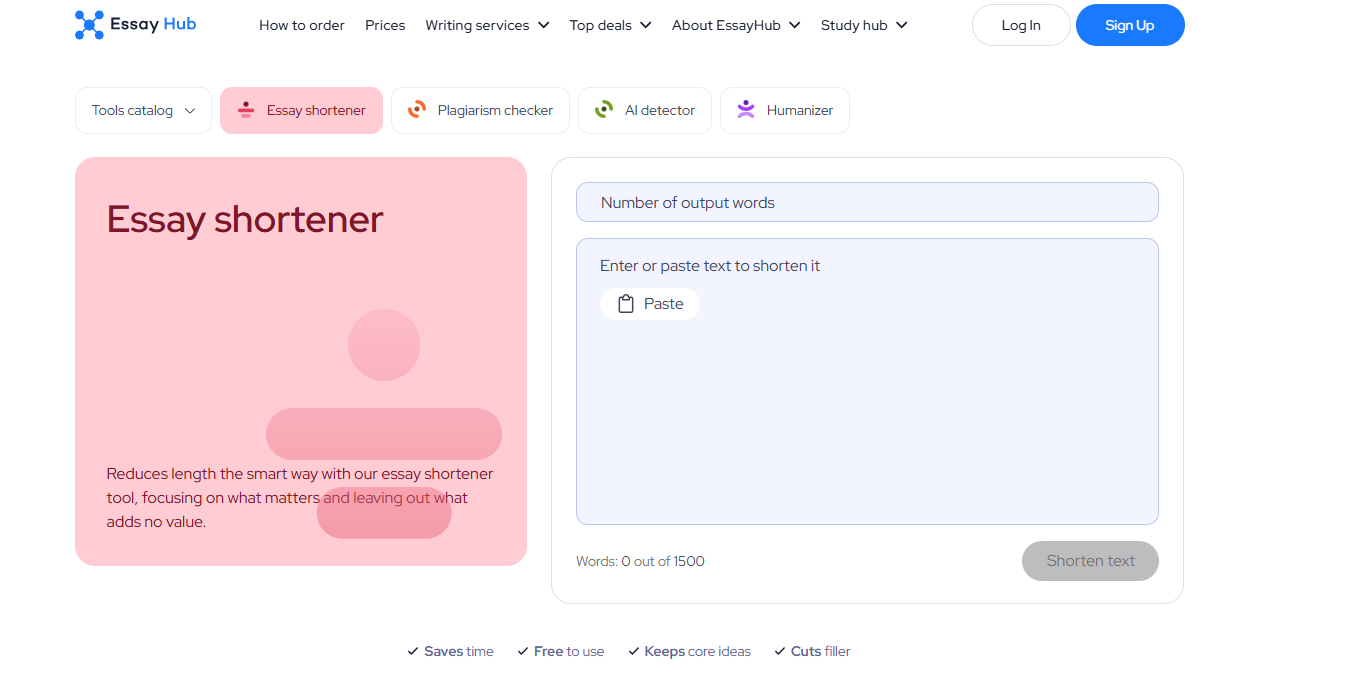
EssayHub offers a free essay shortener that lets users set a target word count and review the resulting changes. It accepts drafts between 50 and 1,500 words, making it suitable for shorter college assignments, application essays, or individual essay sections.
After shortening, the tool provides a report covering changes in sentences, words, and characters. This helps you understand how much text was removed, although it doesn't explain whether the deleted content was necessary.
For students working on an informative essay, checking the revised draft against the original structure is especially important. Removing too much background or explanation can make a paragraph shorter but harder to understand.
Pros:
Target word-count setting.
Supports drafts between 50 and 1,500 words.
Reports changes to sentences, words, and characters.
Free access without registration.
Cons:
Doesn't accept very short or long inputs outside its stated range.
Reduction reports don't evaluate whether evidence or reasoning was lost.
Price:
Free essay shortener.
No signup or stated usage cap.
5. Custom Writing: Best for a Condensed Overview
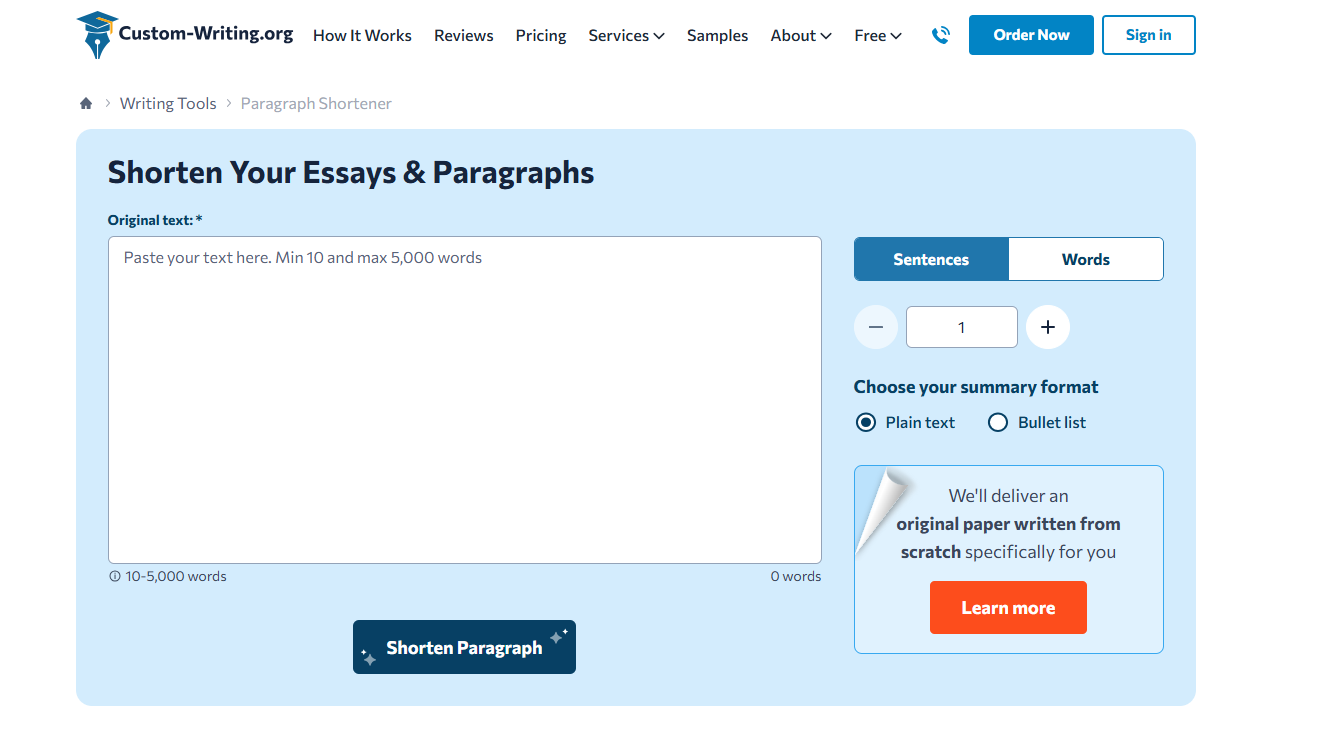
Custom Writing offers a paragraph and essay shortener with controls for output length and format. You can choose word- or sentence-based settings and generate either a prose summary or a bullet-point version of your text.
Unlike an essay shortener that aims to preserve the entire argument, Custom Writing is more useful for identifying the main points of a longer draft. A condensed overview can reveal repeated ideas or sections that contribute little to the thesis.
This distinction matters when working on literature reviews or research-heavy writing. A summary might capture the main findings while leaving out important comparisons, limitations, or analysis. Use the condensed version to guide your edits rather than replacing the assignment with it.
Pros:
Word- and sentence-based length controls.
Supports prose and bullet-point outputs.
Useful for identifying central ideas.
Free online tool.
Cons:
Summary output may remove necessary analysis.
The interface describes a 10–5,000-word range, while supporting instructions also reference a 17,000-character limit.
Not ideal for producing a directly replaceable shortened essay.
Price:
Free online paragraph and essay shortening tool.
6. Summarizer: Best for Sentence-Level Cuts
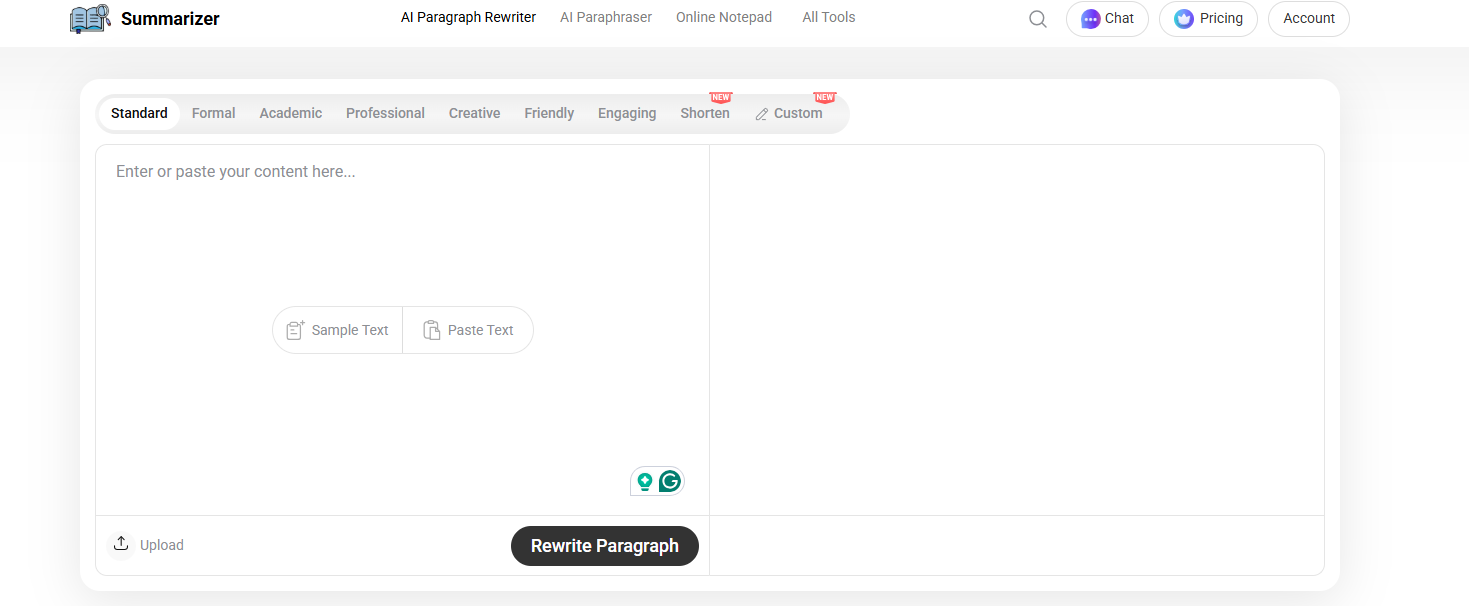
Summarizer's sentence shortener focuses on making individual sentences more concise. Enter a sentence, choose a tone, and generate a shorter version. Available tone choices include academic, formal, and professional styles, making the tool useful for college writing.
It's a practical option when your essay is only slightly over the word limit. Rather than restructuring entire paragraphs, you can identify long sentences and remove unnecessary wording while keeping the surrounding argument intact.
However, shortening sentences individually can sometimes disrupt the flow between ideas. After making several changes, read each paragraph again to check that the transitions and meaning still work.
Pros:
Simple sentence-level shortening.
Multiple tone choices.
Copy and save options.
Free access.
Cons:
Not designed for shortening complete essays.
Individual sentence changes require a final paragraph-level review.
Price:
Free sentence shortener.
No paid plan is required for the basic shortening feature.
How to Shorten an Essay Without Losing the Argument
An AI essay shortener can save editing time, but you need to know what should stay before deciding what to remove. A shorter essay is only better when its argument remains clear and properly supported.
Follow these five steps:
Calculate how much you need to cut. If your essay is 1,200 words and the limit is 1,000, you need to remove 200 words, or roughly 17%. Check whether headings and references count toward the requirement.
Review the essay structure. A clear argumentative essay outline can reveal repeated points, unnecessary background, or sections that don't directly support the thesis.
Protect essential content. Keep your thesis, evidence, important quotations, citations, technical terms, and limitations. Understanding the difference between a thesis statement and a topic sentence can help you decide which information each paragraph must retain.
Remove unnecessary wording first. Cut repeated explanations, filler phrases, and overly long sentences before deleting relevant examples or evidence.
Compare and recount. Read the shortened version against your original draft, check the meaning of every important claim, and confirm the final word count in your submission editor.
If the shorter draft feels awkward or repetitive, Verla's AI Humanizer can help refine clarity and flow after the main edits. The goal is to preserve your reasoning while improving how directly it is expressed.
Shorten the Sentence, Keep Its Boundaries
Before:
"Because participants volunteered to take part in the survey, the findings may not represent the views of all students at the university."
Shorter:
"Because participation was voluntary, the findings may not represent all students' views."
Too Short:
"The survey represents students' views."
The last version removes the limitation and changes the meaning of the original statement. Although it uses fewer words, it makes a claim that the evidence doesn't support.
This is an editorial example rather than a tool-generated result. When editing academic writing, keep qualifiers such as may, some, or under certain conditions when they affect the accuracy of your argument.
A Prompt for "Shorten My Essay" Requests
Reduce this essay from approximately 1,200 words to no more than 1,000 words. Remove repetition and unnecessary wording first. Preserve the thesis, supporting evidence, citations, exact quotations, and important qualifications. Keep the original paragraph order unless a structural change is necessary. List any important information removed, and do not add new claims or sources.
A specific prompt helps the tool prioritize the right changes. Even so, the generated result should be treated as a revision suggestion rather than a final submission.
An Essay Shortener Is Different from a Summarizer
An essay shortener and a summarizer both reduce text, but they serve different purposes.
An AI essay shortener aims to make the original essay more concise while retaining its main argument, evidence, analysis, and structure. A summarizer creates a shorter overview of the content and may leave out supporting explanations or examples.
For instance, a summary of a research paper might describe the central findings without including the evidence needed to support each claim. That's useful for study notes, but it may not meet the requirements of the original assignment.
The same applies to conclusions. When concluding an essay, you can remove repeated background information while keeping the final implication of your argument. The goal is a more focused ending, not simply a shorter one.
Conclusion
The best AI essay shortener depends on how much you need to cut and which parts of the essay must remain unchanged. EssayDone offers terminology protection, EssayPro and EssayHub provide word-count targets, Custom Writing creates condensed overviews, and Summarizer handles individual sentences.
For students who need to improve paragraph clarity alongside shortening, Verla combines goal-based rewriting with AI Humanizer in a broader academic workflow. It can help refine wordy passages while keeping the original draft as the starting point.