You have three good points for your essay. Now comes the oddly tricky part: how do you actually put them on the page? Do you use commas, numbers, or "first, second, third"? If you're trying to figure out how to enumerate in essay writing, the format is often more confusing than the ideas themselves.
This guide walks through how to enumerate in an essay with practical formats and examples you can follow. And if organizing the whole paper is giving you more trouble than the list itself, Verla can help you shape your ideas into a structured essay and refine the draft afterward.
What Does Enumeration Mean in an Essay?
Enumeration is simply a way of presenting several related points in a clear, organized order. Those points might be reasons, examples, steps, pieces of evidence, or parts of an argument.
Here's a basic enumeration example:
Three factors influence academic performance: study habits, class attendance, and sleep quality.
Nothing complicated is happening here. The sentence tells readers that three factors are coming, then gives them in a logical series.
With enumeration in academic writing, though, you usually need to do more than make a list. If those three factors are central to your argument, you'll probably need to explain or support each one later.
Enumeration can also be an enumeration rhetorical device. A writer may pile up related details or ideas to create emphasis or strengthen a point.
How to Enumerate in an Essay Step by Step
There's no single way to enumerate in essay format that works in every situation. A list of three short examples and a list of three complicated arguments obviously shouldn't look the same.
Still, the basic process is pretty consistent:
Know what you're listing. Are these reasons, examples, arguments, steps, or pieces of evidence?
Set up the list. Give readers a clue about what's coming: "There are three main reasons..." is often enough.
Pick a format that fits. Commas work for simple items. Longer or more distinct points may need semicolons, numbers, or separate sentences.
Keep the items parallel. If the first point starts with a verb, the others usually should too.
Develop the important points. Enumeration organizes an argument. It doesn't do the arguing for you.
Parallel structure is one of those small details that makes a surprisingly big difference.
Awkward:
The program helps students save time, improving their writing, and better grades.
Better:
The program helps students save time, improve their writing, and earn better grades.
The second version is easier to read because all three items follow the same grammatical pattern.
How to List Items in an Essay
If you're wondering how to list items in an essay, don't start by asking whether numbers or bullets look better. Start with the items themselves.
What you're listing | Usually works best | Example |
Short, simple items | Commas | The course covers reading, writing, and research. |
Long or complex items | Semicolons | The study examined motivation, including goals and rewards; attendance, including absences and lateness; and performance. |
Clearly separated points | Numbers | Three factors matter: (1) cost, (2) time, and (3) quality. |
Ideas that need explanation | Sentences or paragraphs | First,... Second,... Finally,... |
That's also a useful rule when deciding how to list something in an essay. If you only have three short nouns, numbering them may be overkill. If each item has its own explanation, squeezing everything between commas will probably make the sentence harder to follow.
Commas, Colons, and Semicolons
This is where a simple list can suddenly turn into a punctuation puzzle.Use commas when the items are short:
Students need time, motivation, and effective study methods.
A colon works when the sentence properly introduces what follows:
The experiment measured three variables: speed, accuracy, and consistency.
Semicolons are handy when the items are longer or already contain commas:
The survey included students from Austin, Texas; Portland, Oregon; and Miami, Florida.
You don't get bonus points for using the fanciest mark available. Pick the punctuation that lets a reader understand the list without having to reread it.
How to Enumerate in a Sentence or Paragraph
One useful question can solve a lot of formatting problems: How much do I need to say about each point?
If the answer is "not much," keep the enumeration in a sentence. If each point needs explanation, give yourself more room.
How to Enumerate in a Sentence
When learning how to enumerate in a sentence, start with the simplest version:
The new policy has three goals: reducing costs, improving access, and increasing efficiency.
That's a straightforward enumeration example sentence. All three items are short, parallel, and clearly connected.
Numbers can make an enumerated sentence easier to scan:
The research focuses on (1) student motivation, (2) classroom participation, and (3) academic performance.
This approach is particularly useful if you plan to mention "the first factor" or "the third point" later.
Once the items start getting long, however, don't force them into one giant sentence. Semicolons, separate sentences, or a paragraph-level structure may work better.
How to Enumerate in a Paragraph
If you're looking up how to enumerate in a paragraph, chances are your points need more than a few words each.
For example:
Three factors may improve student performance. First, consistent study schedules help students manage their workload. Second, active recall encourages students to retrieve information instead of simply rereading it. Finally, adequate sleep can improve concentration and memory.
This kind of enumeration in paragraph form gives each idea a little breathing room without breaking the discussion into separate sections.
And no, every paragraph doesn't have to march through "First, Second, Third." Phrases such as "another factor," "in addition," and "more importantly" can make the progression feel less mechanical.
If one of those points needs evidence, examples, and several sentences of analysis, that's usually a sign it deserves its own paragraph.
Enumeration Examples in Essays
Rules make more sense once you can see them working. These enumeration examples cover a few situations that show up regularly in student essays.
Example 1: Listing Examples in an Essay
When figuring out how to list examples in an essay, short examples can usually stay right inside the sentence:
Renewable energy comes from several sources, including solar, wind, hydroelectric, and geothermal energy.
There's no reason to turn four simple examples into four bullet points. Keeping them in the sentence makes the paragraph flow better.
Example 2: Enumerating Main Reasons
Remote learning offers three major advantages: greater scheduling flexibility, easier access to course materials, and fewer geographical restrictions.
Those three reasons could later become the main points of separate body paragraphs.
Example 3: Enumeration in Paragraph Form
There are three reasons the proposal deserves further consideration. First, it could reduce operating costs. Second, it would simplify the current approval process. More importantly, it could make the service more accessible to users.
This is how to enumerate in an essay sample works because the list doesn't feel dropped into the paragraph. Each point moves the discussion forward.
How Verla Can Help You Turn Those Points Into an Essay
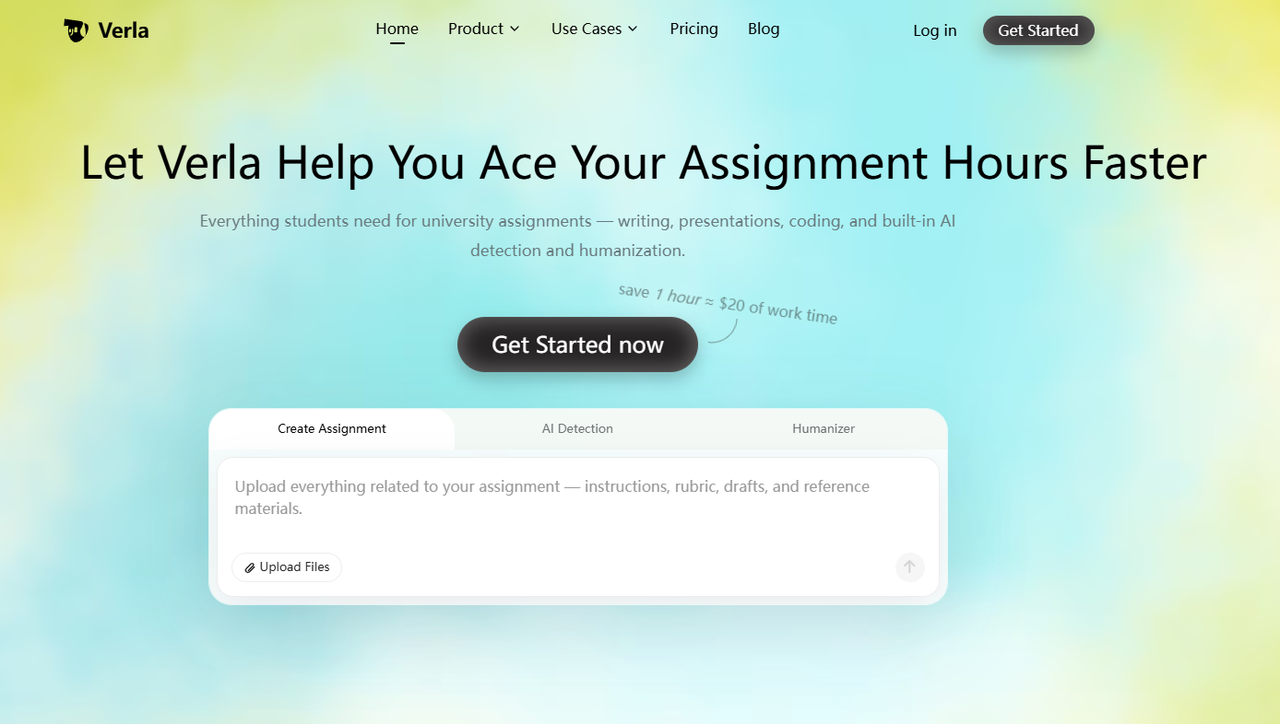
Sometimes enumeration isn't really the problem. You already have four ideas sitting in your notes, but you don't know which one should become the thesis, which ones belong in body paragraphs, or how to connect them without making the essay feel like a checklist.
Verla essay writer can help with that broader writing process. You can use it to organize your main ideas, develop rough points into paragraphs, create a draft from an assignment or topic, and review the writing once the structure is in place.
That can be especially useful when you're deciding whether three related ideas should appear in one sentence, one paragraph, or three separate body paragraphs.
You should still check your evidence, citations, assignment instructions, and required formatting yourself. AI is more useful here as a writing assistant than as a substitute for those decisions. If you want to explore other options, see our comparisons of the best AI for writing essays and best AI for school work.
Enumeration in Academic Writing: Keep the Format Clean
In most academic essays, the goal isn't to make the enumeration visually noticeable. It's to make the ideas easy to follow.
A few practical rules help:
Keep short lists inside normal prose when possible.
Use numbers when the order matters or you need to refer back to specific points.
Keep the grammatical structure consistent from one item to the next.
Don't turn every group of ideas into bullets.
Follow your instructor's requirements and the relevant style guide when a specific format is required.
Common Enumeration Mistakes to Avoid
A list can be technically correct and still be unpleasant to read. These are some of the problems worth checking before you submit:
Packing too much into one sentence. Six complicated points probably don't belong between two periods.
Breaking parallel structure. Keep items in the same grammatical form where possible.
Using commas for everything. If individual items already contain commas, the list can quickly become muddy.
Repeating "firstly, secondly, thirdly" everywhere. Signposts are useful, but they shouldn't become a verbal metronome.
Listing without explaining. Important arguments still need evidence and analysis.
Using bullets just because the list is long. In a traditional essay, reorganizing the ideas into paragraphs may be the better solution.
When a list starts to feel crowded, that's useful information. It may mean the ideas need to be grouped, shortened, or developed separately.
Conclusion
Once you understand how to enumerate in essay writing, the basic rule is pretty simple: make the list easy to follow. Use commas for short items, semicolons when things get complicated, numbers when they add clarity, and paragraphs when your points need room to develop.
If organizing those points into a complete paper is the harder part, Verla can help you move from scattered ideas to a structured draft and then refine the writing. The enumeration gives your ideas order; the rest of the essay gives them meaning.